Mongolia first became a member of the World Intellectual Property Organization (WIPO) in 1979 and has since acceded to 18 international treaties, agreements, and conventions. To date, the Office has registered 17,285 copyrighted works, 59 geographical indications, 102,339 trademarks, 4,906 utility models, 4,149 industrial designs, and 5,477 inventions.
In 2025, the Office received 41 complaints related to intellectual property infringements. Of these, 20 cases were initiated, 14 were rejected, 4 were handled under simplified procedures, and 7 cases were transferred according to jurisdiction, as reported by G. Gantulga, Head of the Administration and Management Department.
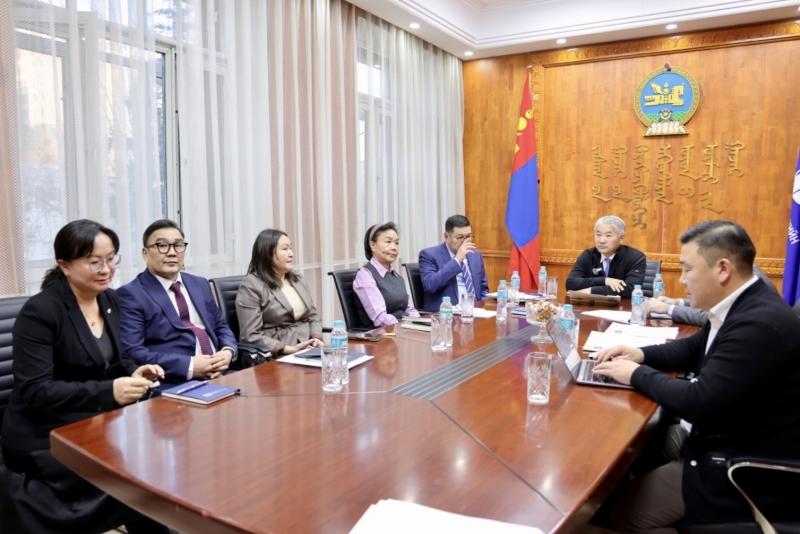
The management of the Intellectual Property Office presented an overview of the institution’s core functions, the protection of intellectual property rights, and the current status of patent, copyright, trademark, and geographical indication registrations, as well as service accessibility and progress in digitalization. They highlighted that in recent years, the number of IP applications has increased, with growing participation from domestic inventors and start-up entrepreneurs.
Minister of Economy and Development J. Enkhbayar emphasized that intellectual property plays a crucial role in the development of innovation, science, technology, creative industries, and in enhancing economic competitiveness. He noted that the Intellectual Property Office must strengthen intersectoral coordination and align its activities with national economic development policies.
Within this framework, participants exchanged views on aligning intellectual property protection with international standards, simplifying registration procedures, expanding digital services, and establishing a legal environment to integrate intellectual property into economic circulation. In particular, the need to cooperate with relevant institutions to transform patents and trademarks into tangible business value, promote licensing, conduct valuation, and increase opportunities for financing was highlighted.
Deputy Minister S. Davaasuren discussed issues related to enhancing staff expertise, expanding cooperation with international organizations, and increasing training and internship programs. At the conclusion of the working meeting, it was emphasized that policies and measures in the intellectual property sector should be implemented in alignment with the medium- and long-term development policies of the Ministry of Economy and Development, while strengthening cooperation among the public sector, private sector, research institutions, and innovative organizations.
Source: med.gov.mn